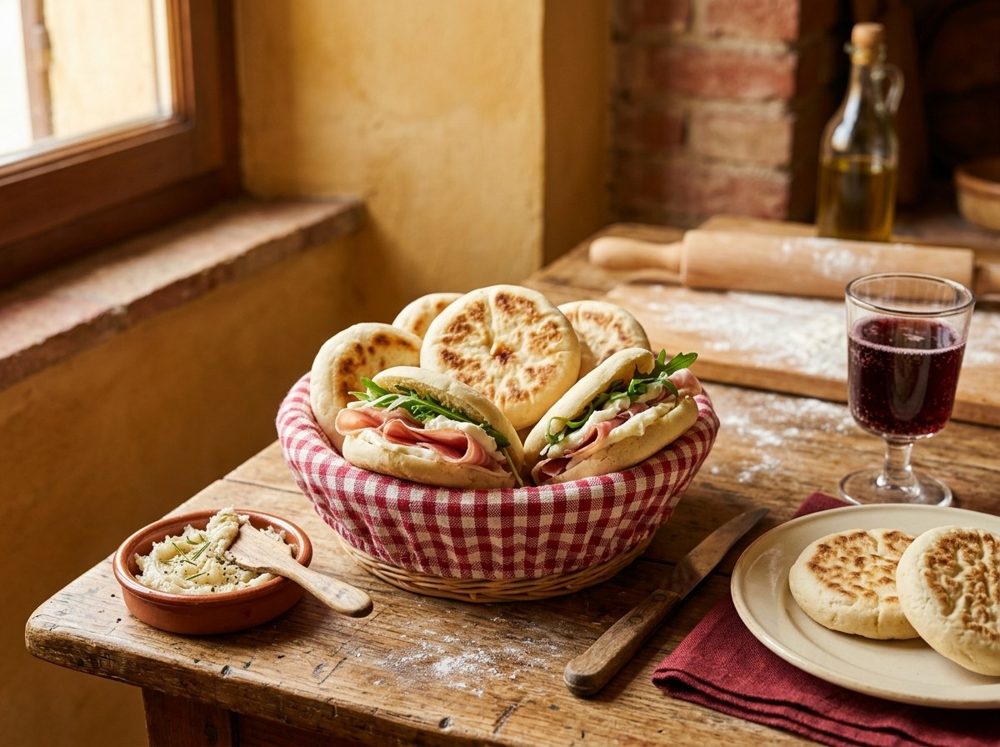
Tigellep. 16
the little Modena breads you split open and fill while they are still hot
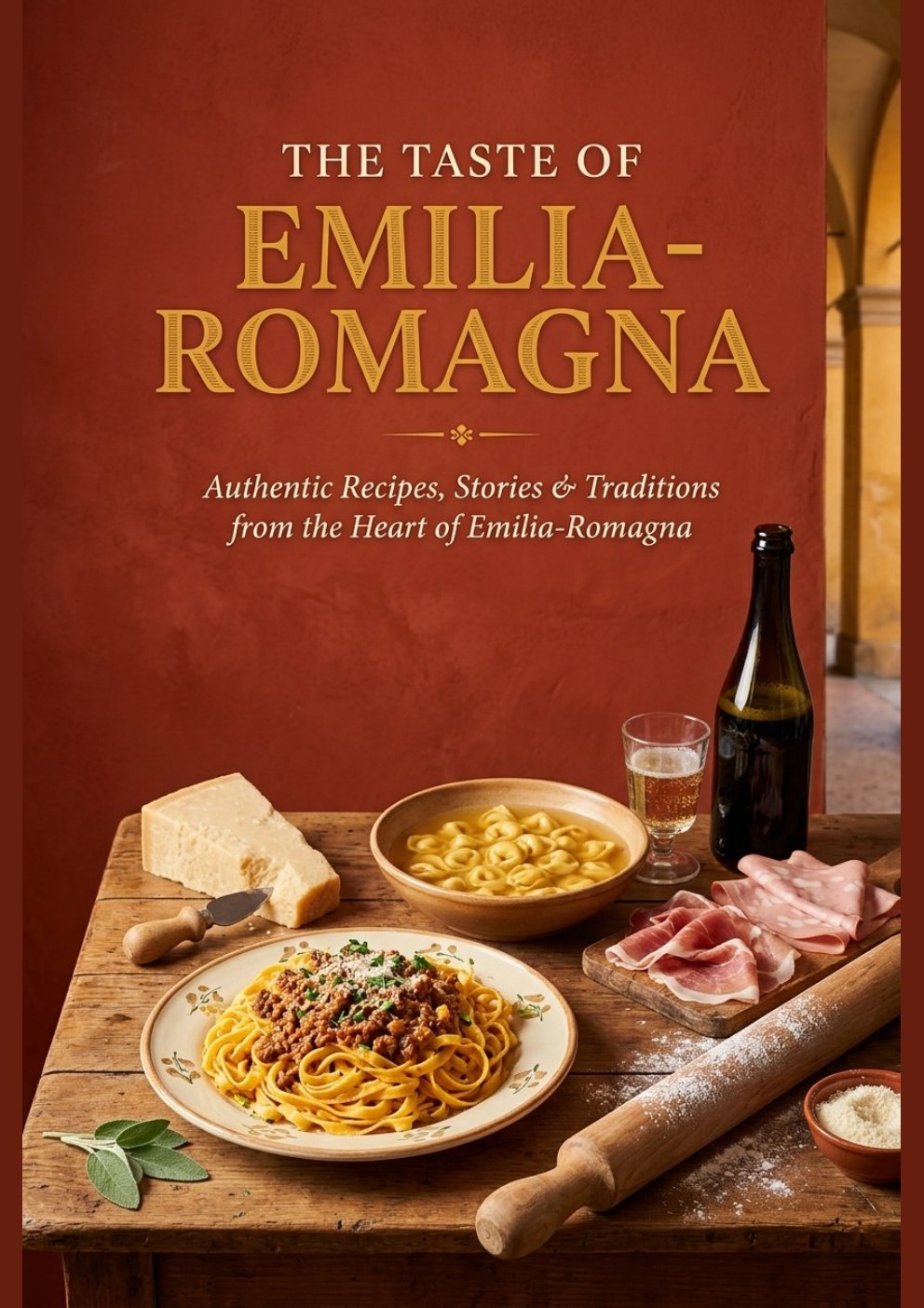
35 authentic recipes from Bologna, Modena, Parma and the Romagna coast · instant cookbook
Fresh pasta, slow ragù, Parmigiano and Lambrusco. The Emilian dinner your friends will still mention next year — with the story behind every dish, so you can tell it at the table.
Instant download · PDF for phone, tablet and computer · One-time payment
A peek inside
Every recipe opens with where the dish comes from and when Emilians eat it. Then come the ingredients, the substitutes for your local supermarket, and clear numbered steps. At the end, the tips Italian grandmothers pass on in the kitchen.
You cook. You clean the house. You buy the good wine.
The pasta comes out of a box, the sauce out of a jar, and the evening is pleasant. Then it is forgotten by Monday.
Maybe you tried "spaghetti bolognese" from a blog. In Bologna, nobody eats that.
Maybe you once had real tagliatelle al ragù on holiday, and every attempt since has tasted like something else.
It is not your cooking. It is the recipes.
Good company, ordinary food, nothing anyone remembers.
Around $40 a head for fresh pasta you could make for a fraction of that, if you knew how.
Cream in the carbonara, chicken in the ragù, garlic everywhere. Every blog sure of itself. None of them from Emilia.
In Emilia-Romagna the real recipes were never written for strangers. They were learned at the elbow of someone rolling pasta on a Sunday morning.
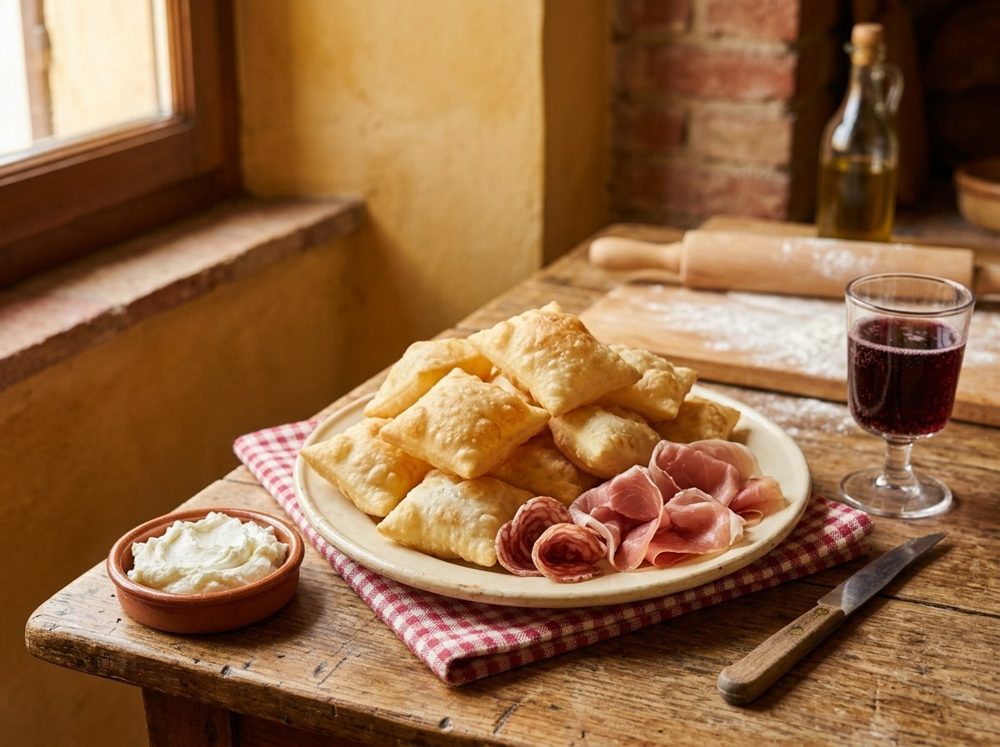
Bologna, Modena, Parma, Reggio, Piacenza, Ferrara, Rimini: all strung along the Via Emilia, the Roman road laid in 187 BC. Every town gave the world something: Parmigiano Reggiano, Prosciutto di Parma, Mortadella, Aceto Balsamico, tortellini.
Bologna takes its food so seriously that the Accademia Italiana della Cucina deposited the reference recipe for ragù at the city's Chamber of Commerce in 1982. The book tells you what that recipe says, and what home cooks do anyway.
Butter, eggs, flour, good cheese and time. Almost everything is in an ordinary supermarket; where it isn't, the book tells you what to use instead.
Guests at 7:30. By 8:15, nobody has touched their phone.
A board of Parmigiano, mortadella and warm gnocco fritto is already on the table. The Lambrusco is cold and fizzing.
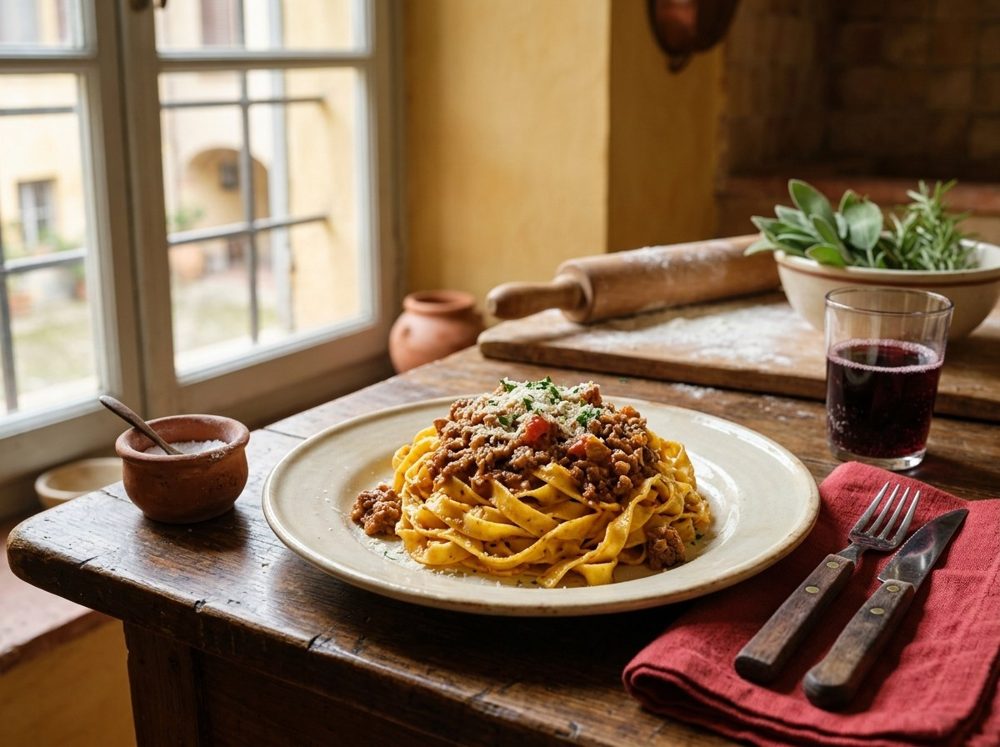
Then the tagliatelle arrive, glossy with a ragù that has been murmuring on the stove since lunchtime.
Someone asks if you made the pasta yourself. You did.
At the end there is zuppa inglese, and a question you'll hear again: "Where did you learn to cook like this?"
the little Modena breads you split open and fill while they are still hot
Bologna's real "bolognese", the one the city deposited as its official recipe
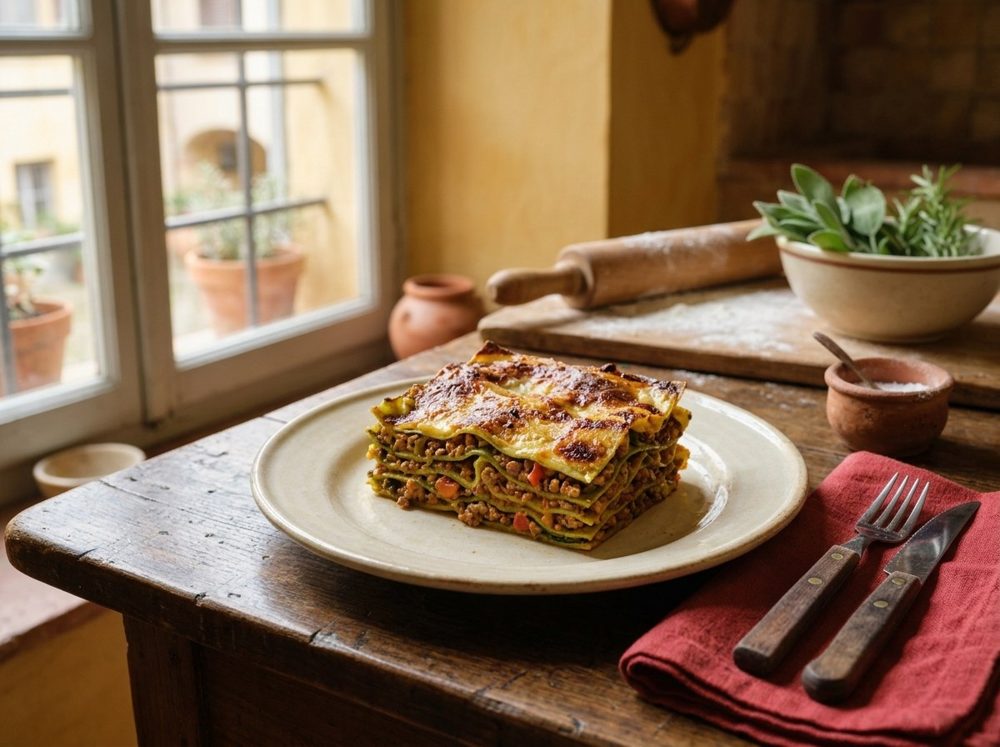
green spinach pasta, ragù, béchamel, Parmigiano: the Sunday centrepiece
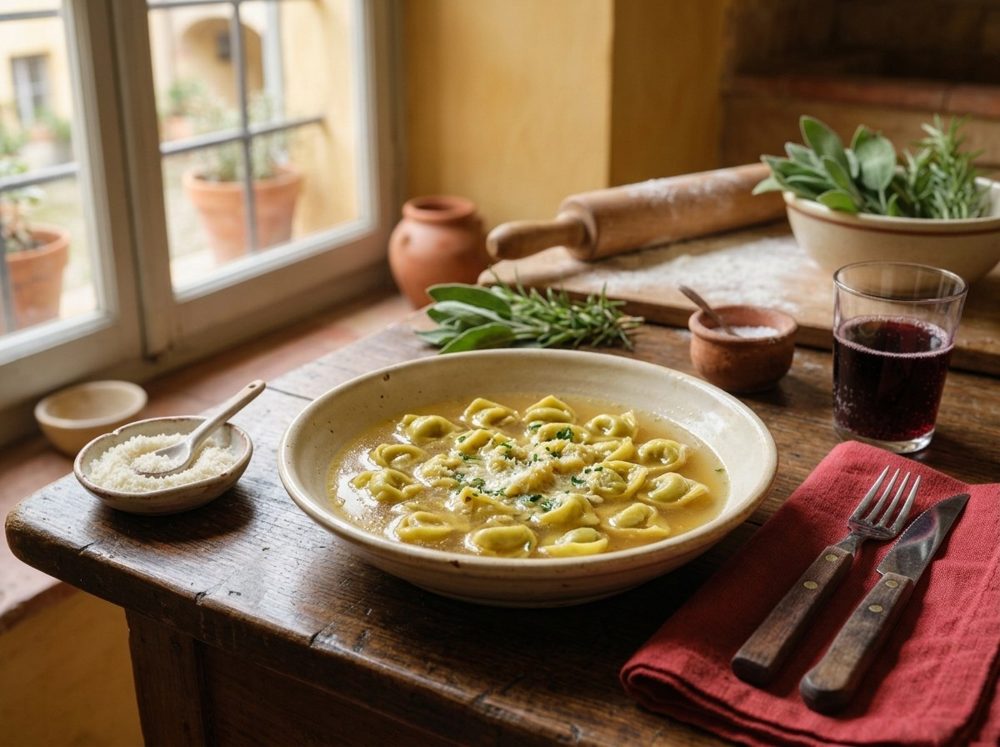
tiny filled pasta in golden broth, Bologna's Christmas
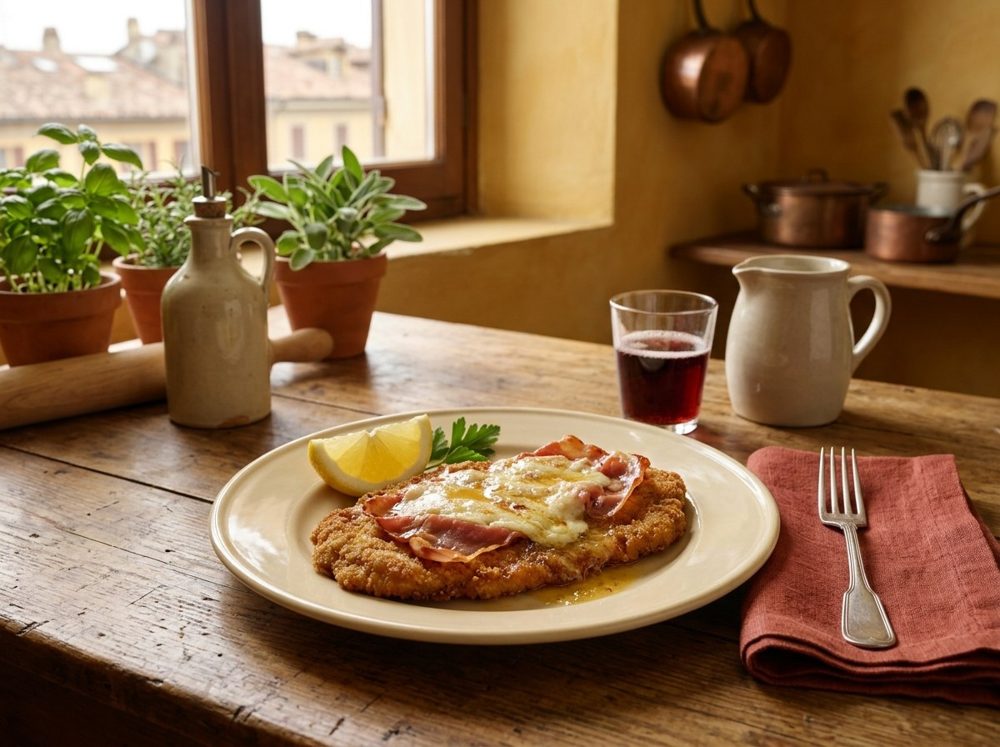
veal, prosciutto, Parmigiano, finished in broth
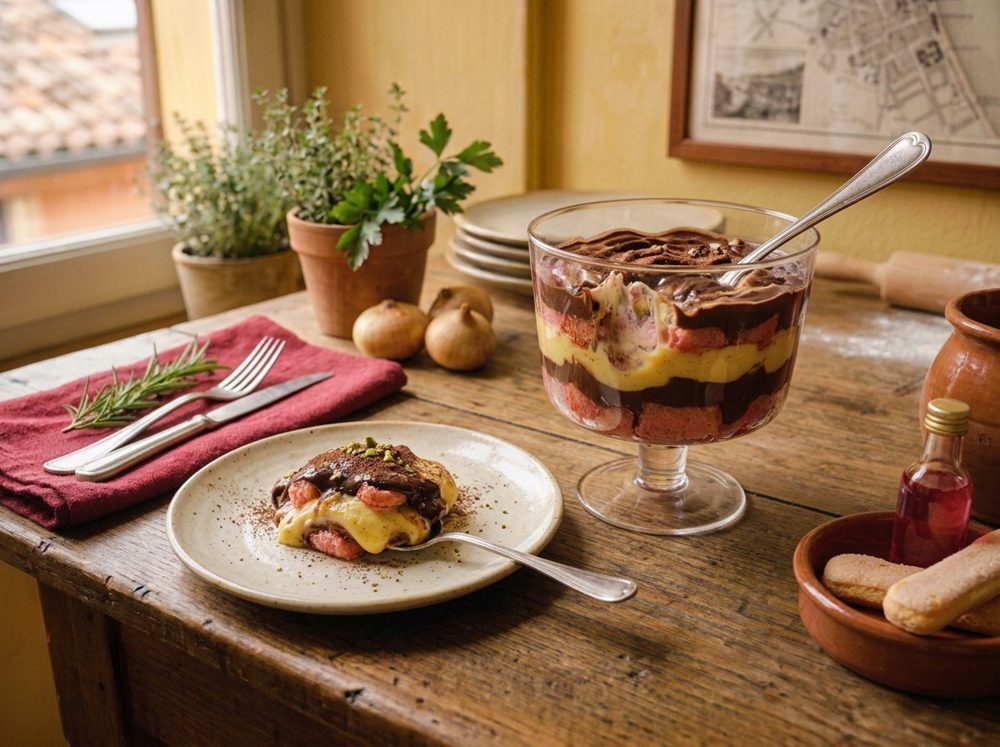
custard, chocolate and Alchermes: the dessert that ends the argument
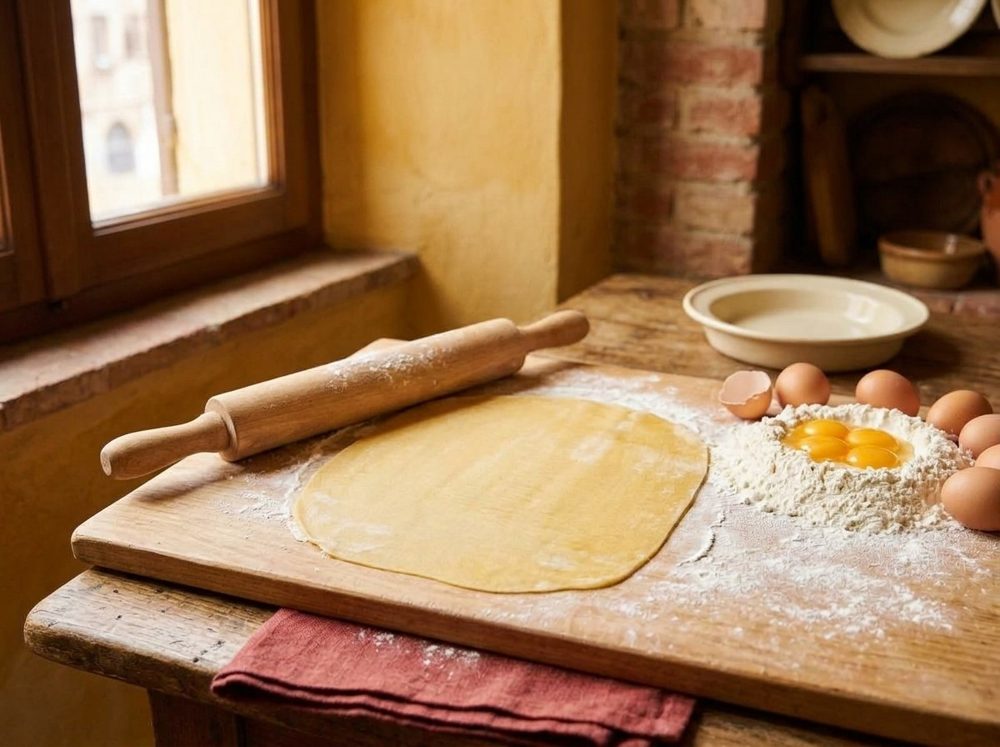
In Emilia-Romagna, Sunday lunch starts on Saturday night, with the ragù. On Sunday morning someone floured the big wooden board, cracked eggs into a well of flour and rolled a sheet of pasta so thin you could read through it. The women who did it were called sfogline, and they never used a recipe.
This book gathers those dishes from Bologna to Parma, from the Apennines to the Riviera, with the history that explains them, and with the substitutes you need if you cook in Toronto, Sydney, Auckland or Dublin.
$29.99
| This book | The free option (a recipe blog) | |
|---|---|---|
| Real regional recipes from Emilia-Romagna | ✓ | ✗ |
| Explains why each step matters | ✓ | ✗ |
| Substitutes for your country | ✓ | ✗ |
| Story of every dish to tell at the table | ✓ | ✗ |
| No ads, no pop-ups, printable | ✓ | ✗ |
The Basics chapter starts from zero: one egg per 100 g of flour, a board and a rolling pin (or a pasta machine). Start with tagliatelle; tortellini can wait for your third try.
Every recipe has an "If you live outside Italy" note: what to buy in a normal supermarket and what to use when something isn't there.
You could. You'd find cream in the ragù and garlic in everything. This book gives you the version Emilia actually cooks, and tells you why.
No, it's a digital PDF. You get the download link by email right after purchase. It works on phone, tablet and computer, and you can print it.
Real regional recipes, with notes where towns or families do it differently.
No. Some are weekend projects (tortellini, lasagne), many are simple: piadina, friggione, scaloppine all'aceto balsamico, torta tenerina.
Metric, with oven temperatures in °C and °F.
No. At checkout you'll see an optional $9 guide, Host Like an Emilian.
Three weeks from now, you could be the person who made the tortellini. All it takes is the right book and one Sunday.
Get The Taste of Emilia-Romagna — $29.99